Understanding the Flexibility and Scope of Mandala Floral SVG Cut Files
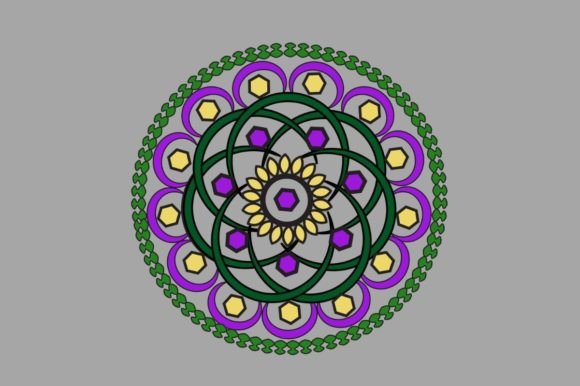
In the world of digital design assets, a Mandala Floral SVG Cut File represents a specific convergence of artistic form and technical utility. At its core, it is a vector graphic file that depicts a circular, symmetrical design incorporating floral motifs and intricate patterns. What distinguishes this type of file from a generic Mandala SVG Cut File is its thematic focus. The inclusion of floral elements—such as petals, leaves, and blossoms—within the mandala's radial structure creates a design that inherently leans towards organic, graceful, and often celebratory applications, whereas a more geometric or abstract mandala might suit different aesthetic contexts.
Technical Composition and Practical Advantages
The typical offering for a Mandala Floral SVG Cut File includes multiple file formats: an SVG, an EPS, a DXF, and a high-resolution PNG. This multi-format approach is a key differentiator when evaluating digital art resources. The SVG file is the vector source, meaning it contains mathematically defined paths and curves. This allows it to be scaled to any size without any loss of quality, which is a critical advantage for projects ranging from a small business card to a large metal wall art piece. The EPS and DXF files broaden compatibility with professional design and cutting software, catering to users who might work with Adobe Illustrator or various CAD and CNC platforms. The provided PNG at 300 DPI and 2800 x 2800 pixels serves as a ready-to-use raster image for simpler digital projects or as a visual reference.
A practical strength of this bundle is its direct address of a common hurdle: format compatibility. By providing the core design in these four formats, it removes the technical barrier of file conversion for many users. However, it’s important to understand the trade-off. While this offers convenience, the utility of each format depends entirely on the user's tools and end goal. Someone using only basic graphic software for digital invitations might only engage with the PNG, while a hobbyist with a home cutting machine will rely primarily on the SVG or DXF.
Evaluating Primary Use Cases and Project Fit
The listed applications—decoration, party invitations, scrapbooking, business cards, greeting cards, backgrounds, stickers, meditation posters, and metal wall art—illustrate the wide potential scope. A Mandala Floral SVG Cut File is particularly well-suited for projects that benefit from both intricate detail and a theme of growth, beauty, or celebration. For instance, a wedding invitation or a floral shop's business card might leverage this design more effectively than a stark, minimalist geometric mandala.
Consider the application for meditation posters. Here, the floral elements can enhance the calming, natural association of the practice, potentially making it a better fit than a purely linear design. Conversely, for a modern tech company's background graphic, a simpler, non-floral mandala might align better with a brand seeking a more abstract and technological vibe. The "best-fit" scenario for a Mandala Floral SVG Cut File often revolves around projects where the decorative, organic, and intricate nature of the design adds meaningful value to the final product.
Comparison with Other Digital Design Asset Categories
When researching options, users often compare standalone SVG files against subscription-based clipart libraries, pre-made physical products, or commissioned custom designs. A Mandala Floral SVG Cut File as a one-time digital download occupies a distinct middle ground. It offers a specific, high-quality design for a single fee, granting full ownership and rights for personal and typically commercial use (depending on the specific license). This contrasts with subscriptions where you pay recurring fees for access to a broader, but possibly less unique, library.
The tradeoff here is between breadth and specificity. A subscription service provides endless variety but may not include the exact floral mandala composition you desire. A custom commission delivers a perfectly tailored design but at a significantly higher cost and time investment. The Mandala Floral SVG Cut File is an optimal solution when you have identified a design style that meets your needs and you prefer a one-off, budget-friendly purchase with immediate access.
Critical Decision Factors for Potential Users
Choosing to use a Mandala Floral SVG Cut File involves evaluating several personal or project-specific factors. First is the technical requirement: do you have the software or hardware (like a vinyl cutter, laser cutter, or printer) capable of utilizing the provided formats? If your work is purely digital and print-based, the PNG and SVG might suffice. If you intend to create physical cut items like stickers or metal art, the DXF and SVG compatibility with your cutting machine is paramount.
Second is the scale of use. The vector nature of the SVG file makes it ideal for projects requiring drastic resizing. If you plan to use the same design for a small sticker and a large wall decal, this file type eliminates quality concerns. Third is the aesthetic alignment. Does the floral intricacy of this mandala harmonize with your project's theme and audience? For a nature-themed scrapbook page or a wellness workshop poster, the fit is strong. For a corporate annual report cover, it might be less appropriate.
Finally, consider the licensing terms, which should be clarified by the seller. Understanding whether you can use the design for commercial products, how many end products you can create, and any redistribution restrictions is essential for making an informed, legal decision.
When to Consider Alternative Resources
A Mandala Floral SVG Cut File may not be the right choice in certain situations. If your project demands a highly original, never-before-seen design that is central to your brand identity, a custom-designed illustration is likely a more necessary investment. Similarly, if you are experimenting with styles and need a vast number of different mandala designs for a low ongoing cost, a subscription to a vector asset platform could be more economical.
Another scenario is when your technical workflow is limited. If you only work with software that cannot import SVG, EPS, or DXF files—using only, for example, standard word processing or basic photo editing tools—then a design provided solely in these vector formats becomes impractical. You would need to seek resources that offer formats native to your software, like specific JPEGs or editable PDFs. The key is to match the asset's capabilities with your tools, project scale, and uniqueness requirements.
Integrating the Design into Realistic Projects
To illustrate its practical utility, imagine using the Mandala Floral SVG Cut File for a series of cohesive branded materials. You could use the SVG in a design program to scale it down, extract a central floral element, and create a logo for a yoga studio's business card. Simultaneously, using the same source file, you could scale it up, send the DXF to a laser cutter, and produce a large, intricate metal wall art piece for the studio's reception area. The PNG could be used as a watermark on their digital meditation guides. This demonstrates how one digital download can service multiple, size-variant applications while maintaining visual consistency.
For a personal project like a milestone birthday party, the design could be adapted for invitation backgrounds, cut as vinyl decorations for glassware, and printed as a focal point on a scrapbook memory page. The limitation to remember is that the design is fixed. While you can change its color, size, and selectively use parts of it, you cannot fundamentally alter the composition of the drawn elements. If you need to remove a specific flower or change the pattern's symmetry, you would need a more editable asset or custom design service.
The value of a well-crafted Mandala Floral SVG Cut File lies in its blend of artistic specificity and technical adaptability. It serves users who have identified a need for a beautiful, nature-infused symmetrical design and possess the means to implement it across various formats and scales. By carefully assessing your own tools, project requirements, and need for design uniqueness, you can determine whether this type of digital asset aligns with your creative or professional goals, or if exploring alternative categories of design resources might yield a better fit.