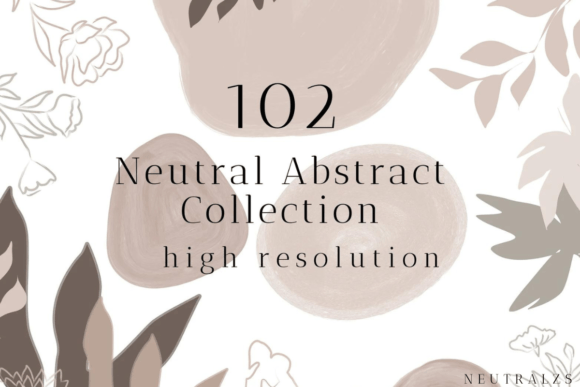
The Resonance of Digital Florals: The Shift Toward Neutral Abstract Shapes
The digital landscape for visual assets is perpetually in bloom, with a particular branch flourishing: the category of abstract floral illustrations. Within this niche, a distinct style is gaining prominence, characterized by a deliberate departure from literal representation. These are not simply flowers rendered digitally; they are conceptual interpretations, often built from geometric forms, flowing lines, and carefully balanced negative space. This movement towards neutral abstract shapes floral designs reflects a broader shift in aesthetic preferences and functional requirements across multiple industries.
Characterizing the Modern Abstract Floral
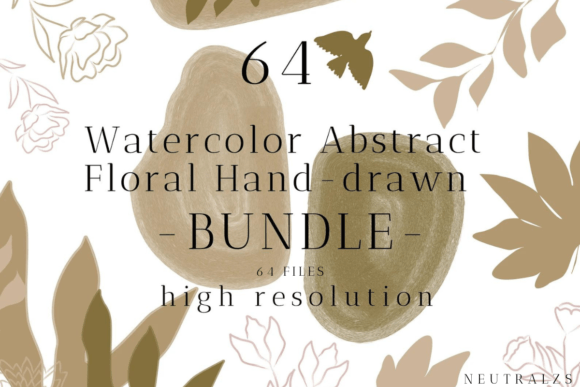
What defines this style? At its core, neutrality refers to a color palette and form language that is intentionally versatile. These illustrations frequently employ muted tones, monochromatic schemes, or soft gradients rather than the vibrant hues of natural botanicals. The shapes themselves are simplified, sometimes deconstructed into basic circles, ovals, and arcs, arranged to suggest petals and stems rather than depict them explicitly. This abstraction creates a visual language that is both elegant and open to interpretation.
The technical specifications often accompanying these resources, such as 144 files floral illustrations in transparent PNG format, point to their practical genesis. A collection of 144 unique files offers a vast library of components, allowing for immense combinatorial creativity. The 1200 DPI high-resolution quality ensures that these images retain crisp detail even at large scales, like the mentioned 4000 pixels, making them suitable for both digital screens and high-end print media like fine art reproductions or large format wedding signage.
Key Advantages in Application
The primary advantage of this aesthetic is its extraordinary adaptability. Because the designs are not tied to specific seasons, species, or vivid colors, they seamlessly integrate into projects with established color schemes or brand identities. A wedding designer can use a set of neutral abstract shapes floral assets across invitations, table numbers, and website banners without clashing with the chosen wedding colors. A stationery brand can incorporate them into a line of notebooks and greeting cards, maintaining a cohesive, modern look.
From a workflow perspective, the file type transparent PNG format is a critical feature. This allows creators to layer illustrations over any background—dark, light, textured, or photographic—without the need for complex clipping paths or manual integration. This efficiency is invaluable for professionals working under tight deadlines, such as graphic designers preparing a client's marketing campaign or entrepreneurs swiftly branding their new product line.
Real-World Use Cases Beyond Craft
While the prompt mentions wedding invitations and stationery, the utility of these assets extends far beyond traditional crafts. In the realm of digital design, they serve as elegant UI elements for websites and apps, providing organic softness to tech interfaces. Educators and researchers utilize them in presentations and academic publications to create visually engaging materials without distracting from the core content. Business owners find value in these illustrations for creating branded social media graphics, report covers, and internal documents that convey a sense of refined creativity.
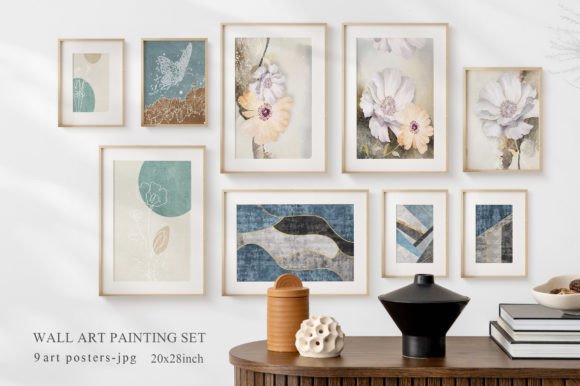
The high-resolution nature, specifically the 4000 px dimension, unlocks applications in physical spaces. Interior designers or event planners can use these files to produce large-scale wall decals, art prints, or even fabric patterns for upholstery. The abstract quality prevents the design from becoming overwhelming at such scales, instead offering a subtle, repeating texture.
Considerations for Selection and Implementation
When evaluating a collection like a 144 files floral illustrations pack, it is important to assess the internal coherence of the set. Do the individual elements share a consistent style and line weight, allowing them to be mixed and matched? Another consideration is the actual range of variation; a large number of files should offer diversity in composition—from single, focal elements to complex clusters and border patterns.
Users must also understand the relationship between DPI and pixel dimensions. 1200 DPI is a measure of print density. For digital use, the pixel dimension (4000px) is more immediately relevant, indicating the image can be scaled to roughly 13 inches wide at a standard screen resolution without loss of quality. This clarity helps professionals plan their projects accurately, knowing whether an asset is suitable for a billboard or a business card.
The Trend Toward Abstract Neutrality in Design
This preference for neutral, abstract botanicals is not arbitrary. It mirrors wider trends in contemporary design, which often favor minimalism, versatility, and a focus on form over literal detail. In a crowded visual world, these designs offer a moment of calm and sophistication. They act as visual anchors that enhance a layout without dominating it. This trend is observable in everything from modern logo design to contemporary art, where the suggestion of natural forms through abstraction carries more conceptual weight than a precise illustration.
Furthermore, the move towards such assets reflects an economic and ecological mindfulness in digital creation. A single, well-crafted, versatile library reduces the need for countless specific, situation-dependent illustrations, streamlining asset management and storage. For the hobbyist or small business owner, investing in one comprehensive, high-quality set like this can effectively serve a multitude of projects over years, proving to be a cost-effective and sustainable approach to resourcing creative work.
In essence, the emergence and popularity of resources described as neutral abstract shapes floral in high-resolution transparent PNG collections signal a maturation in digital asset usage. They represent a toolset designed not for a single outcome, but for empowered creativity across a spectrum of applications, from the deeply personal like wedding crafts to the strictly professional like corporate branding. Their value lies in their silent flexibility—their ability to be a beautiful, supporting element in a story told by someone else, which is perhaps the highest function of any design element.