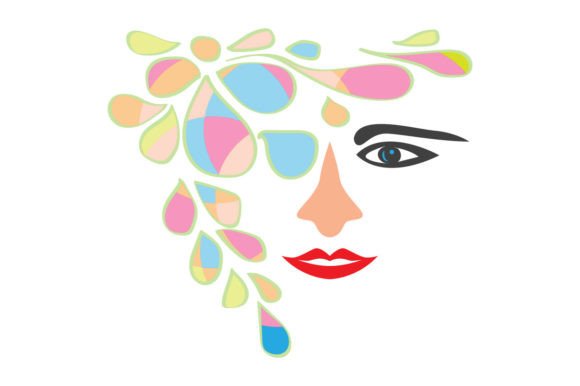
The Power of Woman Face Floral Decoration Illustration
The concept of woman face floral decoration illustration is a powerful and versatile visual motif. At its core, it blends the human portrait with the organic beauty of botanical elements, creating imagery that speaks to growth, beauty, nature, and identity. This isn't merely a pretty picture; it's a flexible design archetype used by creators across fields to convey specific moods, messages, and brand personalities.
Beyond the Surface: Understanding the Visual Language
What makes this particular style so interesting and useful is its inherent symbolism. The human face represents the individual, the client, the audience, or the brand persona. The floral decorations—whether leaves, blossoms, vines, or abstract botanical shapes—introduce layers of meaning. They can signify natural beauty, organic growth, renewal, interconnectedness, or delicate elegance. The abstraction often present in vector designs allows for stylistic freedom, making it adaptable from hyper-realistic to minimalist geometric interpretations.
This illustration style avoids being overly literal. It’s not a portrait with a flower pinned to hair; it’s an integrated design where the flora often becomes part of the facial structure itself—framing the profile, replacing hair, or forming the contours of the cheekbones. This fusion is key to its abstract vector appeal and its wide application.
Creative Directions and Stylistic Variations
You can push the basic concept in numerous directions to suit your project's tone. Consider these stylistic approaches:
- Minimalist Line Art: Use single-line strokes to outline both the female face and the leaves, creating a clean, modern, and sophisticated look ideal for logos or app icons.
- Geometric Abstraction: Break down the floral elements into triangles, hexagons, and circles, constructing the face from these shapes for a tech-forward or boldly graphic outcome.
- Lush Botanical Overgrowth: Let the floral decoration feel wild and abundant, with detailed leaves and flowers cascading over the face, perfect for conveying themes of fertility, wellness, or natural abundance.
- Monochromatic Depth: Work within a single color family, using shade and contrast to create dimension, which can be incredibly effective for branding needing a strong, focused visual.
- Positive/Negative Space Play: Have the floral elements form the face through cut-outs or surrounding space, a clever technique for print design and merchandise.
Practical Applications Across Industries and Audiences
The utility of woman face floral decoration illustration is vast. Its appeal to a broad adult demographic from 20 to 50 means it can be tailored for many contexts.
For Brands and Marketers
This imagery is a cornerstone for brands in wellness, beauty, eco-friendly products, spirituality, female empowerment, and lifestyle sectors. It can serve as a central logo, a recurring pattern on packaging, or a hero image on a website homepage. For a skincare brand, the illustration might emphasize gentle, leaf-like patterns to communicate natural ingredients. A financial consultancy aiming for a softer, approachable image might use a minimalist floral-face vector to symbolize growth and personal attention.
For Content Creators and Publishers
Bloggers, educators, and freelance writers can use these illustrations to define their visual content. They make excellent featured images for articles on topics like self-care, creativity, gardening, interior design, or personal development. A custom illustration can become a recognizable signature for a YouTube channel or podcast series, instantly setting an aesthetic tone.
For Designers and Hobbyists
For the creatives themselves, this theme is a rich project idea. It can be explored in digital painting, vector art, print-making, or even as inspiration for physical crafts like papercut art or embroidery. Designers can create themed sets—social media templates, icon packs, or print-on-demand merchandise like t-shirts and journals—targeting the audience that finds inspiration in this blend of feminine and natural design.
Adapting the Concept for Different Goals and Formats
To effectively adapt the illustration, always start with your audience and platform.
For Social Media: Simpler, bold compositions work best for small-scale profile pictures or Instagram posts. Focus on clear silhouettes and limited color palettes that stand out on a busy feed.
For Print and Merchandise: Consider how the design will look on physical objects. A highly detailed illustration might be perfect for a large art print, but a simplified, contour-based version is better for a small enamel pin or mug. Always test the scalability.
For Web and UX: In digital interfaces, these illustrations can add warm, human-centered visual elements. Use them as decorative elements in headers, as part of empty-state graphics, or as custom avatars for a community. Ensure they don’t clutter or slow down page loading—optimized SVG vector formats are ideal.
Keeping Your Results Effective and Original
While the theme is popular, your execution can remain distinct. Avoid simply copying trending styles. Instead, inject your or your client's unique perspective. Perhaps integrate specific flowers that have personal or cultural relevance. Play with unexpected color combinations—deep blues and metallics instead of pastels. Combine the floral face motif with other abstract elements, like subtle geometric backgrounds or textures.
Maintain consistency if using the illustration within a larger system. Define a color palette, line style, and floral complexity that will be used across all touchpoints. This creates a cohesive brand identity rather than a one-off graphic.
From Inspiration to Implementation
Let’s ground this with a realistic example. Imagine a small business owner running an online store for handmade ceramics. They want to refresh their brand to feel more organic and connected to the artistry of their work. They commission a woman face floral decoration illustration where the floral elements are crafted from stylized clay cracks and glaze drip patterns. This unique variation directly ties the visual to their product. This illustration becomes their logo, is etched onto their packaging tape, and is used as a background pattern on their website. It speaks directly to their niche audience of design-conscious consumers looking for artisanal goods.
Another example: an educator creating online courses on mindfulness. They use a series of simple, calming floral-face illustrations where the leaves are serene, flowing lines. Each illustration represents a different course module—peace, growth, resilience. These aren't just decorative; they function as clear, conceptual headers that visually communicate the course's emotional benefits.
The woman face floral decoration illustration is more than a trend. It’s a functional visual language. By understanding its components—the human element and the natural decoration—you can deconstruct and reconstruct it for virtually any project that aims to connect with an audience on a level that is both personal and beautifully abstract. Start with the message you need to convey, then let the face and the flora tell that story together.