Crafting Elegance: The Art of Vintage Sweet Floral Label Borders
In the realm of design, where digital assets often feel ephemeral, there exists a category of artistic elements that carry a tangible, enduring charm. Collections like the Vintage Sweet Floral Label Border set represent not just graphics, but reservoirs of aesthetic tradition, ready to be poured into modern creative vessels. These hand-painted watercolor illustrations, isolated on clean white frames, offer a bridge between the meticulous craft of the past and the versatile demands of today’s product design landscape.
The Distinct Character of Watercolor Botanical Clipart
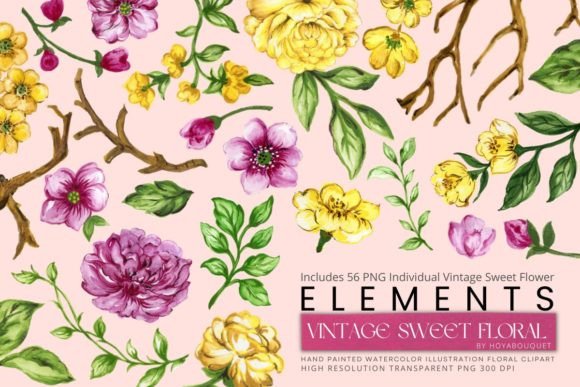
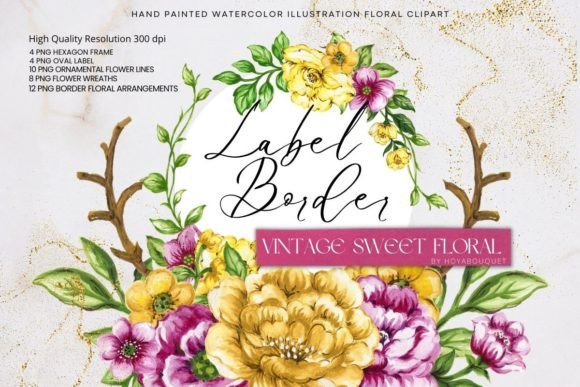
What defines this particular style of floral clipart? It is a confluence of specific artistic choices. The use of watercolor technique imbues the illustrations with a soft, organic texture—gentle gradients of pink and yellow, delicate washes of color that mimic the natural bleeding of pigments on paper. This is contrasted by the crisp, defined lines of a label border or a hexagon frame, creating a pleasing tension between fluid artistry and structured form. The floral arrangements themselves are often romantic and slightly wild, reminiscent of botanical sketches from a bygone era, yet isolated on white to ensure immediate utility for the designer.
This isolation is a critical feature. It means each element—a flower wreath, an ornamental flower line, an oval label—stands ready for integration without tedious background removal. The provided high-resolution 300 DPI files ensure this elegance translates flawlessly from screen to physical surface, a cornerstone for professional print and product application.
Core Components of a Comprehensive Floral Asset Set
A robust collection goes beyond a single image. It provides a system of complementary parts. The inclusion of multiple format types, such as borders, banners, frames, and individual floral arrangements, allows for modular design. A designer might combine an ornate border floral arrangement for a main packaging panel with a simpler hexagon frame for a secondary label, all while maintaining a cohesive vintage sweet floral theme. The typical breakdown often includes:
- Illustration Frames & Border Banner Layouts: These serve as foundational canvases or header elements, setting the overall tone.
- Specific Frame Shapes (Hexagon, Oval): Offering variety for different label formats and focal points.
- Ornamental Flower Lines & Wreaths: Versatile elements for accenting edges, creating seals, or serving as central icons.
- Border Floral Arrangements: More complex, often asymmetrical designs that provide a rich, detailed perimeter.
- Hand-Painted Floral Clipart: Individual blossoms and stems that allow for ultimate customization and building of unique compositions.
Practical Applications Across Industries
The true value of these assets is measured in their application. Their relevance spans from the purely artistic to the strictly commercial, often blending both.
Print and Stationery: A Natural Habitat
Greeting cards, notebooks, and stationery items are perhaps the most intuitive use. The vintage sweet floral aesthetic evokes feelings of nostalgia, personal connection, and refined taste. A watercolor bouquet might grace the cover of a journal, while an oval label frame becomes the perfect space for a handwritten address on an envelope. The 300 DPI resolution guarantees that even fine details on a small notecard print sharply and clearly.
Product Packaging and Brand Identity
In markets saturated with minimalist design, a vintage floral border can carve out a distinct niche. For brands in cosmetics, specialty foods, or craft beverages, this aesthetic communicates natural ingredients, artisanal quality, and gentle sophistication. A floral label border can transform a simple jar or bottle into an object of desire, suggesting care and tradition. It’s particularly effective for limited editions, gift lines, or brands with a storytelling component.
Home Decor and Ceramics
The translation from digital file to physical object is beautifully realized on ceramics and home decorations. A hexagon frame containing a floral wreath could be applied to a plate or a mug. Border arrangements might wrap around the edge of a tray or a candle holder. The watercolor style, less harsh and more painterly than vector graphics, lends a warm, handmade feel to factory-produced items, elevating them from mundane to decorative.
Considerations for Creators and Business Owners
Utilizing such a collection effectively requires more than just technical skill; it demands an understanding of context and harmony.
The first consideration is scale and composition. The intricate detail of hand-painted illustrations must be respected. Using a dense border floral arrangement on a very small surface, like a perfume box tab, might result in visual clutter. Conversely, a single ornamental flower line might feel insufficient on a large notebook cover. Successful design involves matching the complexity and scale of the asset to the product’s dimensions and visual weight.
Color integration is another key point. While the provided PNG files with transparent backgrounds offer flexibility, the existing palette of soft pinks, yellows, greens, and blues sets a dominant mood. Introducing stark, modern colors into the same design space can clash. The most seamless integrations often use the existing floral colors as the primary palette, or employ neutral backgrounds (cream, soft grey, white) that allow the watercolor hues to sing without competition.
The Advantage of a Complete ZIP File Collection
Receiving a ZIP file containing a coordinated set, as described, provides immense workflow advantages. It eliminates the need to source disparate elements from different artists, ensuring stylistic consistency across an entire product line or marketing campaign. For a business owner creating a range of items—from kitchen aprons to gift cards—this consistency builds a stronger, more recognizable brand identity. For the hobbyist or educator, it offers a rich toolkit for personal projects or teaching materials without the stress of asset management.
The Enduring Relevance of Vintage Floral Motifs
Why does this specific aesthetic continue to resonate across such a broad audience, from professionals to hobbyists? It taps into a universal appreciation for nature rendered with human artistry. It avoids the cold precision of pure digital geometry and the sometimes overwhelming boldness of contemporary patterns. The vintage sweet floral label border style occupies a middle ground—it is decorative but not overly frivolous, structured but not rigid, nostalgic but not outdated.
In a digital age, these assets are paradoxically a means to reintroduce the human touch. The visible brushstrokes, the gentle color variations, the asymmetrical balance of a hand-painted wreath—all signal care and creativity. When applied to a physical product, they carry that signal from the designer to the end-user. This translation of digital artistry into tangible beauty, enabled by high-quality, print-ready files, is perhaps the core of their real-world relevance. They are not merely images; they are conduits for a particular kind of elegant, softened beauty, waiting to be framed on a label, embossed on a cover, or glazed onto a ceramic surface, bringing a touch of timeless craft into the everyday.