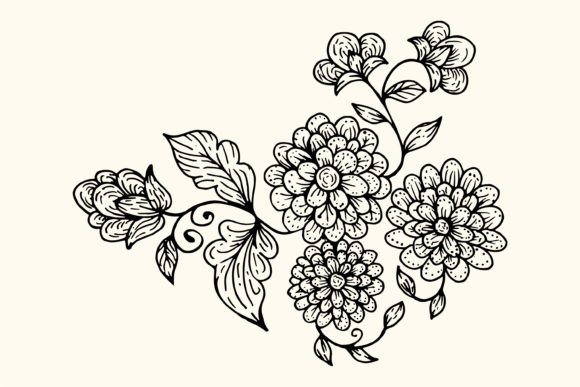
Black and White Batik Floral Vector: A Designer's Essential Toolkit
The timeless elegance of batik floral patterns, rendered in crisp black and white vector format, offers a unique blend of cultural artistry and modern design utility. These graphics are not merely decorative elements; they are versatile, scalable assets that can elevate branding, create striking packaging, and bring a sophisticated, handcrafted aesthetic to digital projects. For beginners dipping their toes into design, to seasoned professionals seeking efficient assets, a well-curated Black and White Batik Floral Vector pack is a significant resource. However, the journey from downloading a ZIP file to successfully integrating these motifs into your work is fraught with subtle pitfalls that can undermine your project's quality and your own efficiency.
The Foundation: Understanding File Formats Beyond the Label
A common and costly oversight is treating the listed file formats—AI, EPS, CDR, JPEG, SVG, PNG—as interchangeable. They are not. Each serves a distinct purpose, and misunderstanding this leads to frustration and poor-quality outputs. For instance, using the provided JPEG for a large-scale print project will result in blurry, pixelated patterns, as JPEGs are raster images with fixed resolution. The core value of a Black and White Batik Floral Vector pack lies in the true vector files: AI (Adobe Illustrator), EPS (for cross-platform compatibility), and SVG (for web and digital applications). These are infinitely scalable without loss of quality.
A better approach: Before even opening a file, assess your end use. For logo adaptation, website graphics, or any project requiring scaling, open the AI or EPS file in your vector editing software (like Illustrator or CorelDRAW, which uses CDR). Use the PNG for quick placement in presentations or social media mockups where high resolution at a fixed size is acceptable. Always treat the JPEG as a preview file, not a working asset. This simple prioritization saves hours of troubleshooting quality issues later.
Color Assumptions and Editing Potential
Another frequent misunderstanding is assuming “Black and White” means locked colors. Many designers download a Black and White Batik Floral Vector set and attempt to use it as-is, missing its immense editing potential. A true vector file allows you to ungroup elements, recolor the florals or the background, adjust line weights, and isolate individual motifs. You are not just getting a static image; you are acquiring a malleable design framework. Failing to exploit this leads to generic-looking outcomes that don’t truly integrate with your brand’s unique color palette.
Consider this realistic example: A small business owner needs packaging for a tea brand. They use the batik floral vector as a white pattern on a black box. It looks good, but it doesn’t stand out. The better choice? Open the EPS file, change the floral lines to a deep forest green, and set the background to a cream color. Now, the design feels custom, aligns with the product’s natural aesthetic, and creates a more memorable visual identity. Always explore the file’s structure; your software’s “ungroup” function is the key to transformation.
Resolution and Application Misalignment
Professionals and hobbyists alike often overlook the crucial detail of application-specific preparation. Using the same SVG file for a website hero image and a t-shirt print will cause problems. While vectors are scalable, exporting them correctly for the medium is essential. For web (SVG), ensure paths are optimized and file sizes are reasonable for load speed. For print (AI, EPS), confirm your document color mode is CMYK and check that intricate line details will be reproducible at the intended size.
The mistake here is a one-size-fits-all export mentality. It affects cost and satisfaction: a poorly optimized SVG can slow down a site, hurting user experience, while a print file set in RGB can lead to unexpected color shifts on merchandise, wasting money. The practical advice: create a checklist for each medium. Before finalizing, ask: Is this the right file format for the output? Have I exported with the correct settings (resolution for PNG, compression for web)? This diligence ensures the inherent quality of the Black and White Batik Floral Vector translates perfectly to its final form.
Evaluating Artistic Cohesion and Cultural Nuance
When choosing a batik floral vector pack, the immediate focus is often on technical specs. What’s frequently neglected is evaluating the artistic style and cultural nuance of the patterns. Batik motifs vary widely—some are highly traditional and intricate, others are modernized and minimalist. Selecting a pack whose style clashes with your project’s tone creates a disjointed final product. For example, a bold, geometric batik floral might not suit a brand aiming for soft, romantic aesthetics.
Before downloading or purchasing, scrutinize the sample images (the JPEG previews) closely. Do the floral rhythms align with your vision? Is the line work too dense for a small application like a business card? Does the pattern feel authentic to the batik art form, or is it overly stylized? This pre-selection step, focused on artistic cohesion rather than just file format availability, guarantees that the asset will enhance, not hinder, your design communication.
The Integration Mistake: Treating Vectors as Placeholders
A final, subtle error is treating these vectors as mere placeholder graphics to be dropped into a layout. Their power lies in integration. Beginners and marketers might plop a pattern into a brochure corner without considering how it interacts with typography, other images, or negative space. This results in a cluttered, unbalanced composition where the beautiful batik floral vector becomes visual noise.
The corrective, solution-focused approach is to think of the vector as a design partner. Use individual floral elements as custom bullet points or text dividers. Employ a repeated, scaled-down pattern as a textured background for a text block, ensuring contrast keeps the text readable. Isolate a single, elegant bloom to create a custom watermark or social media icon. By deconstructing and thoughtfully integrating the asset, you move from generic usage to creating a unique, cohesive design language that leverages the full artistry of the Black and White Batik Floral Vector.
Ultimately, these vector packs are toolsets. Their value is unlocked not by the download itself, but by informed, intentional application. By avoiding the common technical and artistic missteps—from misusing file formats to neglecting integration strategies—you ensure that these elegant patterns serve your project efficiently, elevate its quality, and communicate your intended message with clarity and sophistication. Start with the right file for the right job, unlock its editable potential, tailor it for your medium, choose a pack with stylistic alignment, and integrate it thoughtfully. That is the path from a simple ZIP file to a standout design.